


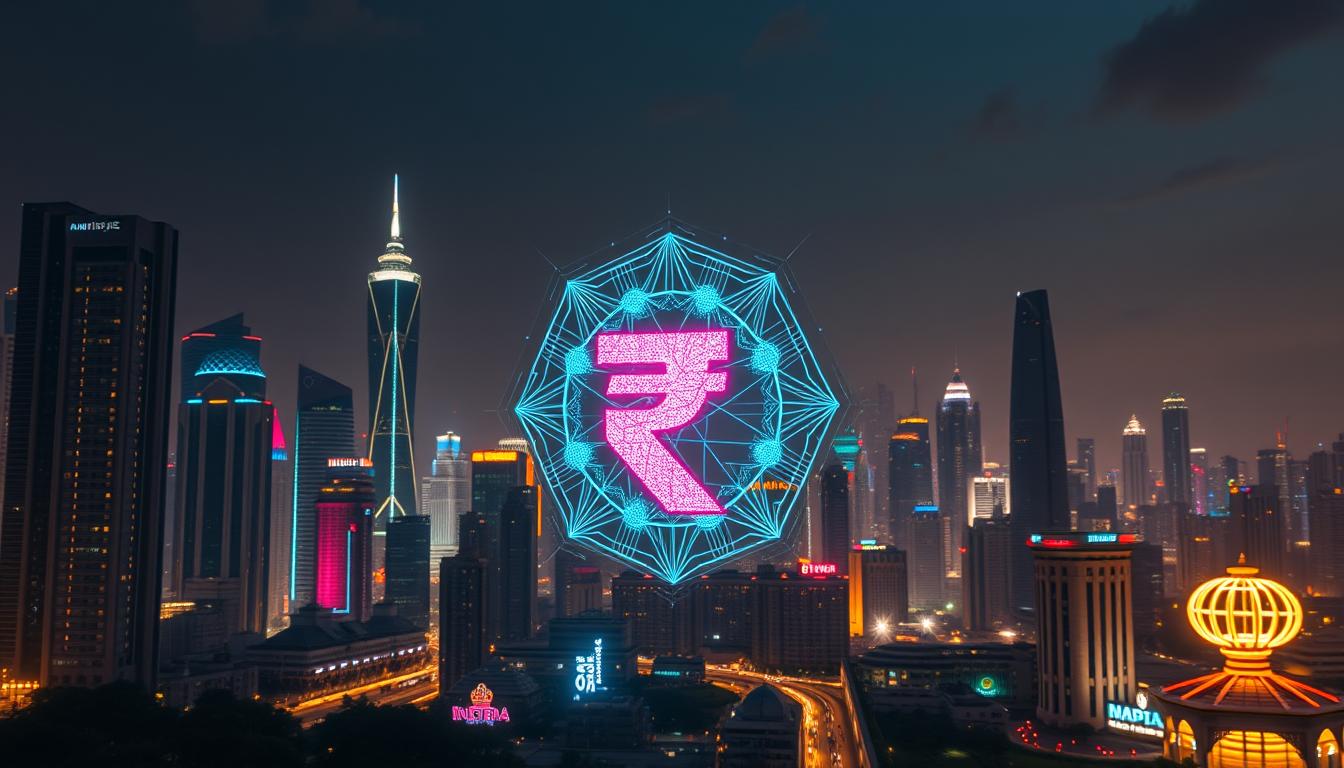
The Digital Rupee is set to transform how India handles money. This isn’t just a technological upgrade — it’s a major shift in how we buy, sell, and interact with money every day.
As India moves toward becoming a fully digital economy, the Digital Rupee stands at the heart of this evolution. Both the government and the public are embracing this transition with enthusiasm, seeing it as a bold step toward a smarter, faster, and more transparent financial system.
But what exactly does this future look like? And how does the Digital Rupee fit into India’s broader vision for a cashless society? Let’s explore how this initiative is reshaping the nation’s financial landscape.
Key Takeaways
- 🇮🇳 India is on track to become the world’s third-largest economy by 2025.
- India’s Digital Currency 2025 will play a defining role in reimagining the nation’s financial ecosystem.
- The Digital Rupee will accelerate the adoption of digital payments and enhance financial inclusion.
- Government initiatives are driving this transition, ensuring stability and trust in the system.
- Public response has been largely positive, reflecting growing confidence in digital transactions.
- India’s digital currency trends signal a bright and innovative future for financial transactions.
India’s journey toward a cashless future is more than a technological milestone — it’s a statement of progress. With strong policy backing, growing public acceptance, and rapid innovation, the Digital Rupee is set to redefine how India experiences money.
The Evolution of India’s Digital Currency Landscape

Over the past decade, India’s digital currency landscape has transformed dramatically. What began as simple digital payment systems has evolved into a thriving ecosystem of innovative financial technologies. This journey reflects India’s growing confidence in digital transformation and its vision for a modern, cashless economy.
Early Steps Toward Digital Currency
India’s digital revolution began with the rise of mobile payment platforms and e-wallets, which made everyday transactions faster and simpler. The launch of the Unified Payments Interface (UPI) marked a major milestone — allowing seamless money transfers across banks in real time.
This innovation not only changed how people paid but also built the foundation for broader digital currency adoption. The government’s strong push for a cashless economy further accelerated this shift, encouraging millions to move from traditional cash transactions to digital payments.
Technology Powering the Change
Technological progress has been the backbone of India’s digital currency success. Advancements in blockchain, data encryption, and digital security have made transactions safer, transparent, and more reliable. These innovations are creating a financial system that’s both efficient and trustworthy.
The results speak for themselves — UPI transactions have skyrocketed, proving that India’s citizens are embracing digital money with enthusiasm and confidence. From local vendors to large enterprises, digital payments have become an everyday reality across the country.
Most Read:- How Public and Private Keys Keep Your Crypto Safe
The Road Ahead
India’s journey with digital currency is far from over. With the introduction of the digital rupee and continuous government support, the country is on track to redefine how money moves. As technology continues to evolve, India’s digital financial ecosystem will only grow stronger — leading the way for a smarter, more connected economy.
India Ki Digital Currency 2025: What to Expect

India is on the brink of a major financial transformation. By 2025, the digital rupee will play a central role in shaping the nation’s economy, redefining how people send, receive, and manage money. This isn’t just about technology—it’s about creating a smarter, more inclusive financial system for everyone.
A New Way to Pay
Picture this: you walk into your local grocery store or book movie tickets online, and within seconds, you’ve made your payment using the digital rupee. No need for cash, cards, or long waits—just instant, secure transactions.
That’s the convenience India’s digital currency promises. By 2025, it will bring speed, efficiency, and transparency to millions of everyday transactions.
The Benefits Ahead
The digital rupee will do much more than make payments faster. It’s expected to deliver strong economic benefits that strengthen the nation’s financial backbone. With digital money, counterfeiting and tax evasion will become harder, helping create a cleaner, more transparent economy.
At the same time, financial inclusion will improve as more people—especially those in remote areas—gain access to digital banking and payment options.
Key Expectations for 2025
| Aspect | Expected Outcome |
|---|---|
| Transaction Speed | Real-time processing of payments |
| Financial Inclusion | Greater access to financial services for all citizens |
| Economic Transparency | Reduction in counterfeiting and tax evasion |
| Technological Infrastructure | Advanced and secure systems ensuring reliability |
| Adaptation Challenges | Need for widespread awareness and user education |
Challenges to Overcome
While the digital future looks bright, the journey won’t be without hurdles. Educating people about the digital rupee and making the system easy to use will be essential. Strong cybersecurity measures must also be in place to protect transactions from potential threats and hackers.
The Road Ahead
The future of digital currency in India is filled with promise. By adopting and understanding these changes, individuals and businesses alike can become part of a more efficient, transparent, and innovative financial ecosystem.
The digital rupee isn’t just another payment method—it’s the next big step in India’s evolution toward a cashless, confident, and connected economy.
The Future of Digital Currency in India
The future of digital currency in India looks incredibly promising. With the digital rupee paving the way, India is not only preparing for a major shift in how money moves—it’s also setting the stage to influence global financial trends. This evolution could position India as a key player in international trade while contributing to greater global economic stability.
Shaping a Smarter Financial Future
Emerging technologies, from blockchain to advanced payment systems, are transforming how financial transactions happen. As India strengthens its digital currency framework, these innovations will help create a more connected, transparent, and inclusive financial system—one that works for everyone, from city entrepreneurs to rural communities.
The digital rupee represents more than a new payment option; it symbolizes India’s digital confidence and its commitment to building a future-ready economy.
Driving Global Partnerships and Innovation
Experts in the fintech sector believe that India’s digital currency will spark new global collaborations. These partnerships could lead to the creation of innovative financial products and services, making transactions faster, safer, and easier across borders.
By building trust and efficiency into the system, the digital rupee could redefine how India interacts with international markets, opening doors to more inclusive growth.
Leading the Way Forward
India’s vision for the digital rupee goes beyond technology—it’s about using digital innovation to drive economic inclusion. Every step forward brings the country closer to a future where financial access is available to all.
As this transformation unfolds, the digital rupee will not just follow global trends—it will help shape a new financial era. The impact will be seen in stronger banking systems, smarter financial tools, and new opportunities for individuals and businesses alike.
The road ahead is filled with potential. By embracing digital currency, India is not just preparing for the future—it’s creating it.