


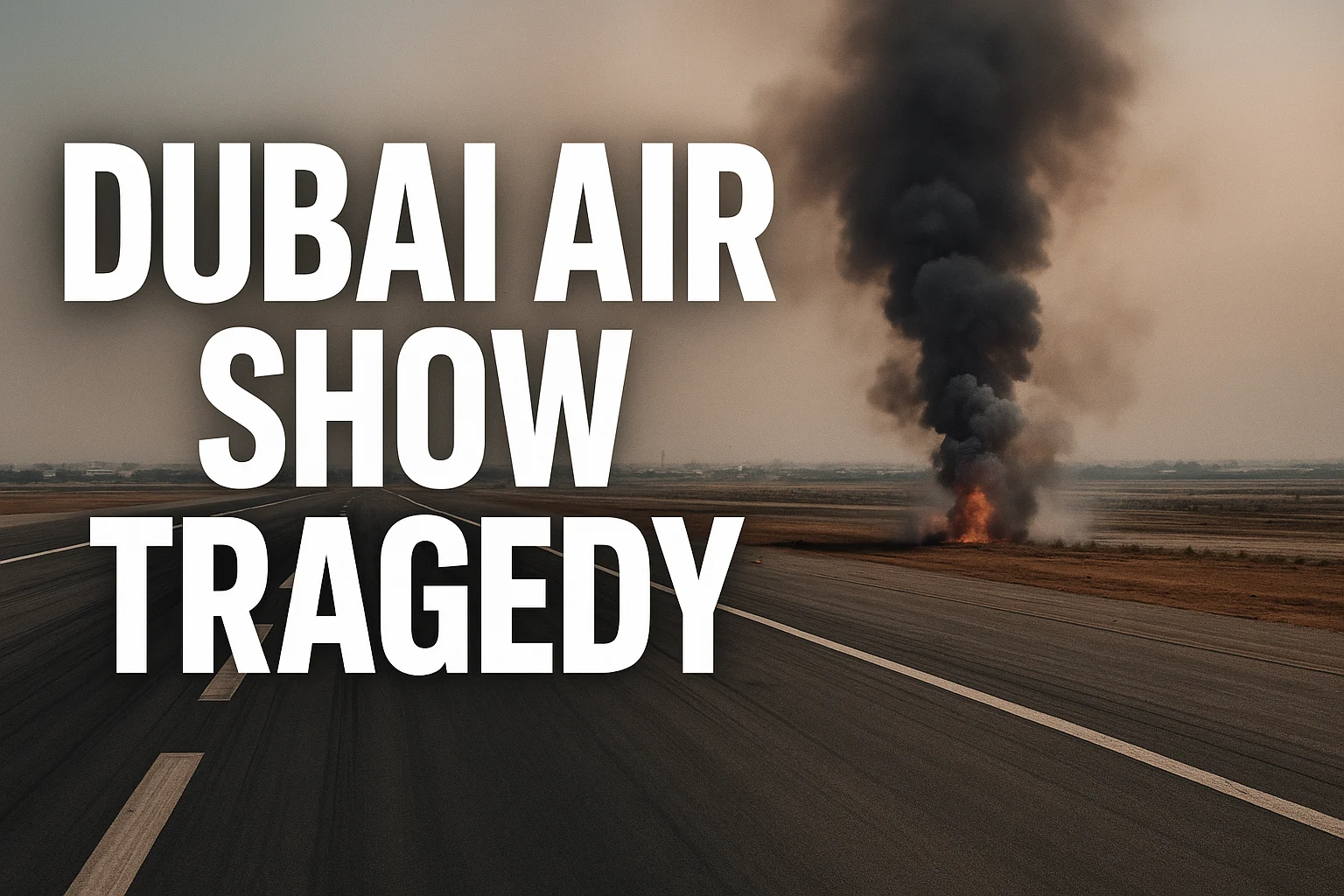
A shocking incident at the Dubai Air Show has once again pushed global aviation safety into the spotlight, and for many in India, it has also reopened emotional memories of the first-ever Tejas fighter jet crash. While airshows are celebrated for breathtaking aerobatic displays and cutting-edge aircraft technologies, they can also be high-risk environments where even the smallest error can lead to tragedy.
The Dubai Air Show accident has prompted aviation enthusiasts, defence analysts, and the general public to revisit the long journey of the HAL Tejas, India’s homegrown fighter jet, and especially the painful chapter marked by its first crash. This renewed conversation brings together questions about aviation safety, pilot training, aircraft reliability, and the evolution of India’s defence aviation ecosystem.
Aviation Tragedies That Leave a Mark
Airshows attract global attention because they showcase the very best in aerospace design — fighter jets, helicopters, drones, supersonic aircraft, and next-gen defence systems.
But behind the excitement lies immense risk. Every maneuver, every steep climb, and every low-altitude turn demands absolute precision.
The Dubai Air Show accident reminded everyone how quickly things can go wrong, even when aircraft are operated by some of the most skilled pilots in the world. Within minutes, social media was flooded with reactions, eyewitness accounts, and comparisons with past incidents involving advanced fighter jets.
This is when many in India recalled the first Tejas crash — an unexpected moment that shook the nation and tested the resilience of India’s indigenous fighter program.
Looking Back: The First Tejas Crash
The Tejas Light Combat Aircraft (LCA) symbolizes decades of Indian innovation in defence technology.
Built by Hindustan Aeronautics Limited (HAL) and developed under DRDO, the Tejas represents India’s ambition to build world-class fighter jets capable of standing alongside global competitors.
However, the Tejas journey hasn’t been without challenges.
The first crash of the Tejas aircraft became a turning point. It wasn’t just another aviation incident — it was a moment loaded with emotion, scrutiny, and national importance. Questions were raised about:
- Aircraft safety and design
- Testing procedures
- Pilot complexity and cockpit response
- Emergency protocols
- Software and mechanical systems
But perhaps the most remarkable thing was how quickly India responded. Instead of letting the program collapse under pressure, the setback became fuel for improvement. Engineers reworked systems, strengthened safety architecture, and enhanced overall reliability.
Why the Dubai Air Show Crash Brings Back These Memories
The Dubai Air Show accident created a sense of déjà vu for many Indians following defence news and aviation developments.
Both incidents share common themes:
- High-performance aircraft in demanding flight conditions
- Unexpected mechanical or operational failures
- Public shock and widespread media coverage
- Renewed discussions about global aviation safety standards
- Emotional reflection on the risks taken by pilots worldwide
As the story gained traction, Google searches for “Tejas crash,” “LCA Tejas history,” “India fighter jet safety,” and “Dubai Air Show accident update” surged — showing just how deeply the public connects present events to past memories.
How Far Tejas Has Come Since Its First Crash
While the first crash was a tough moment, the Tejas program transformed significantly afterward. Today, Tejas is:
- Operating in Indian Air Force squadrons
- Praised by global aviation experts
- Considered one of the world’s best lightweight fighter jets
- Equipped with advanced avionics, electronic warfare systems, and improved flight stability
- Export-ready, with interest from several countries
The transformation from the early challenges to today’s operational success shows how resilient and ambitious India’s aviation ecosystem has become.
Why These Stories Matter
Incidents like the Dubai Air Show crash and the first Tejas crash highlight important themes for the modern world:
- Pilot courage
- Engineering innovation
- Aviation risk management
- Global defence collaboration
- Continuous improvement in aircraft safety
They remind us that every aircraft we see soaring in the sky carries years of research, countless tests, and the unwavering dedication of engineers, pilots, and defence teams.
The Dubai Air Show accident may have triggered sorrow and concern, but it also revived conversations about how far aviation technology has come — and how much further it must go. For India, it served as a reminder of the Tejas program’s early setbacks, and more importantly, its incredible comeback.
The story of Tejas is not just about a crash; it’s about resilience, innovation, and the determination to build something world-class.
And in moments like this, the world is reminded that every tragedy also holds lessons that push aviation forward, making the skies safer for everyone.