


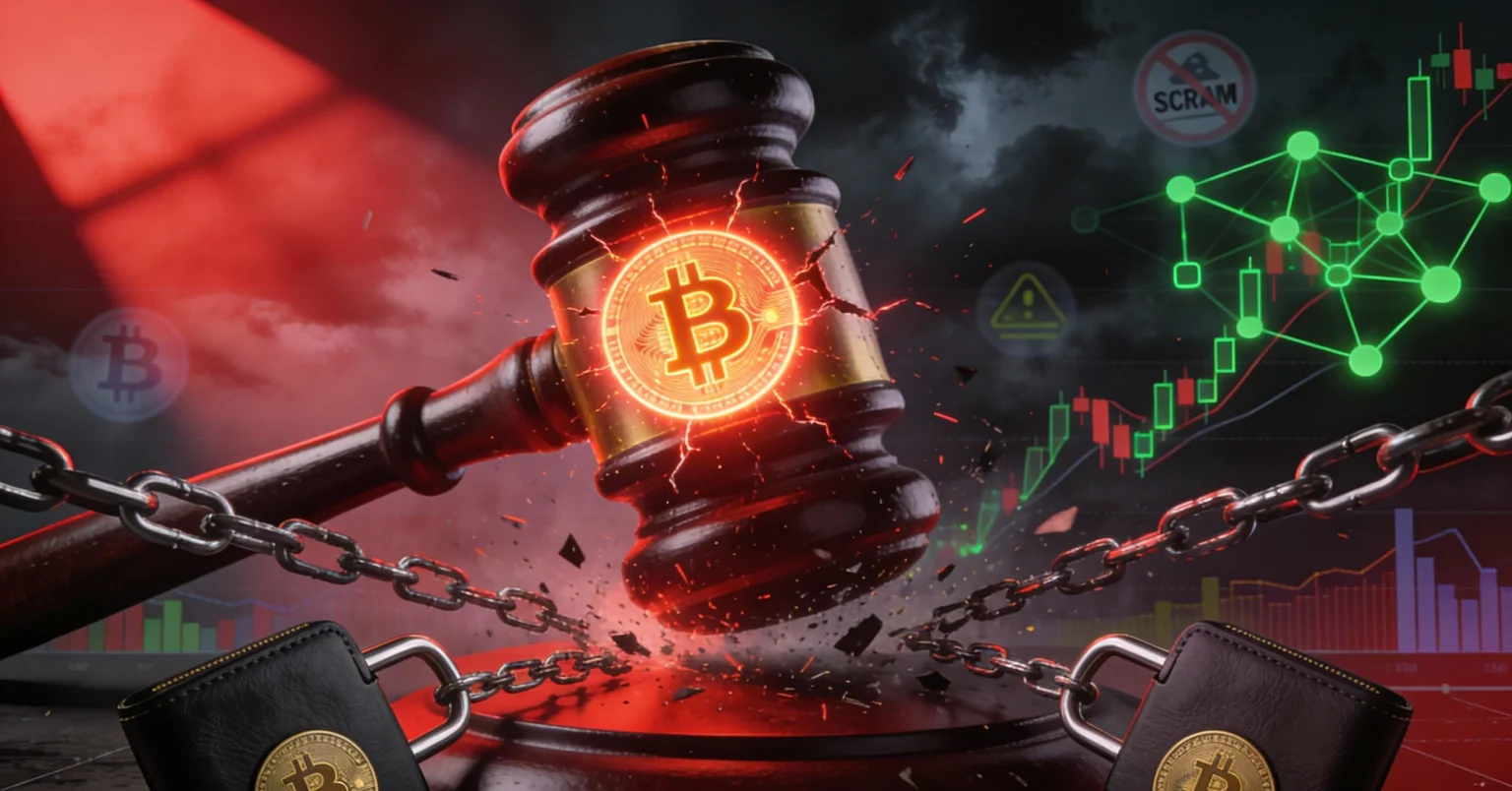
The U.S. Department of Justice recently pulled off record-breaking crypto seizures, targeting scams that stole billions from victims worldwide. These actions spotlight the dark side of crypto fraud while signaling stronger enforcement ahead. Investors and traders now wonder: what does this mean for crypto market stability and your portfolio?
Key Seizures Explained
Federal agencies seized over $225 million in cryptocurrency linked to “pig butchering” scams in mid-2025, marking the largest crypto confiscation by the U.S. Secret Service. Scammers lured victims into fake investment platforms, then vanished with funds after building false trust.
Later, in October 2025, the DOJ grabbed a staggering $15 billion in Bitcoin (127,271 BTC) from Cambodian scam compounds run by figures like Chen Zhi of the Prince Group. These operations involved human trafficking, forced labor, and laundering through shell companies.
Blockchain analysis by the FBI and Secret Service traced funds across networks, with Tether aiding one probe. Over 400 victims, many Americans, lost life savings to these schemes.
Bullish Signals for Crypto
These seizures prove regulators can track and claw back illicit funds, boosting institutional confidence in Bitcoin and blockchain tech. The Strategic Bitcoin Reserve now holds seized assets, treating BTC as a strategic hold rather than quick-sale fodder.
Practical tip: Use tools like Chainalysis or TRM Labs to verify wallet histories before trading large sums. This reduces scam risks and aligns with DOJ’s push against fraud.
Enforcement deters bad actors, paving the way for clearer rules under President Trump’s pro-crypto stance. Expect more victim reimbursements, stabilizing prices long-term.
Bearish Risks Ahead
Massive liquidations from seized assets could spark price volatility, as seen with past Silk Road BTC dumps. A $14B forfeiture in 2025 already rattled markets temporarily.
Scam compounds in Southeast Asia laundered billions via “pig butchering”—romance-style cons leading to fake crypto investments. Heightened scrutiny might slow exchange on-ramps for legit users.
Example: Huione Group, hit by FinCEN, washed $4B in dirty crypto, including DPRK hacks. New rules block such networks from U.S. systems, but compliance costs rise for platforms.
Stay Scam-Proof: Actionable Tips
Protect yourself from crypto investment scams with these steps:
- Verify platforms: Stick to regulated exchanges like Coinbase; avoid unsolicited DMs promising 100x returns.
- Check wallets: Scan for taint using Etherscan or blockchain explorers before transfers.
- Report fast: Contact FBI’s IC3 or Secret Service if scammed—your info aids seizures.
- Diversify wisely: Allocate no more than 5-10% to high-risk alts; favor BTC/ETH.
Diversify into stablecoins during volatility spikes from enforcement news. Track DOJ announcements via justice.gov for early warnings.
Conclusion
DOJ’s crypto seizures expose scam vulnerabilities but reinforce blockchain’s transparency as a crime-fighting tool. The industry emerges stronger, with better safeguards and maturing regs. Act now: Audit your holdings, tighten security, and position for the next bull run—your portfolio will thank you.
FAQ’s
What are pig butchering scams?
Romance frauds where scammers build trust, push fake crypto investments, then drain accounts. DOJ seized $225M+ from these in 2025.
Will these seizures crash Bitcoin prices?
Short-term dips possible from sales, but reserves and ETF inflows offset this. History shows quick recoveries.
How does DOJ trace crypto?
Via blockchain forensics, partnering with Tether and firms like Chainalysis. Funds can’t hide forever.
Are more seizures coming?
Yes—Scam Center Strike Force targets Southeast Asia networks. Stay vigilant.
Should I worry as a legit trader?
No, if compliant. Focus on KYC’d platforms to avoid false flags.