


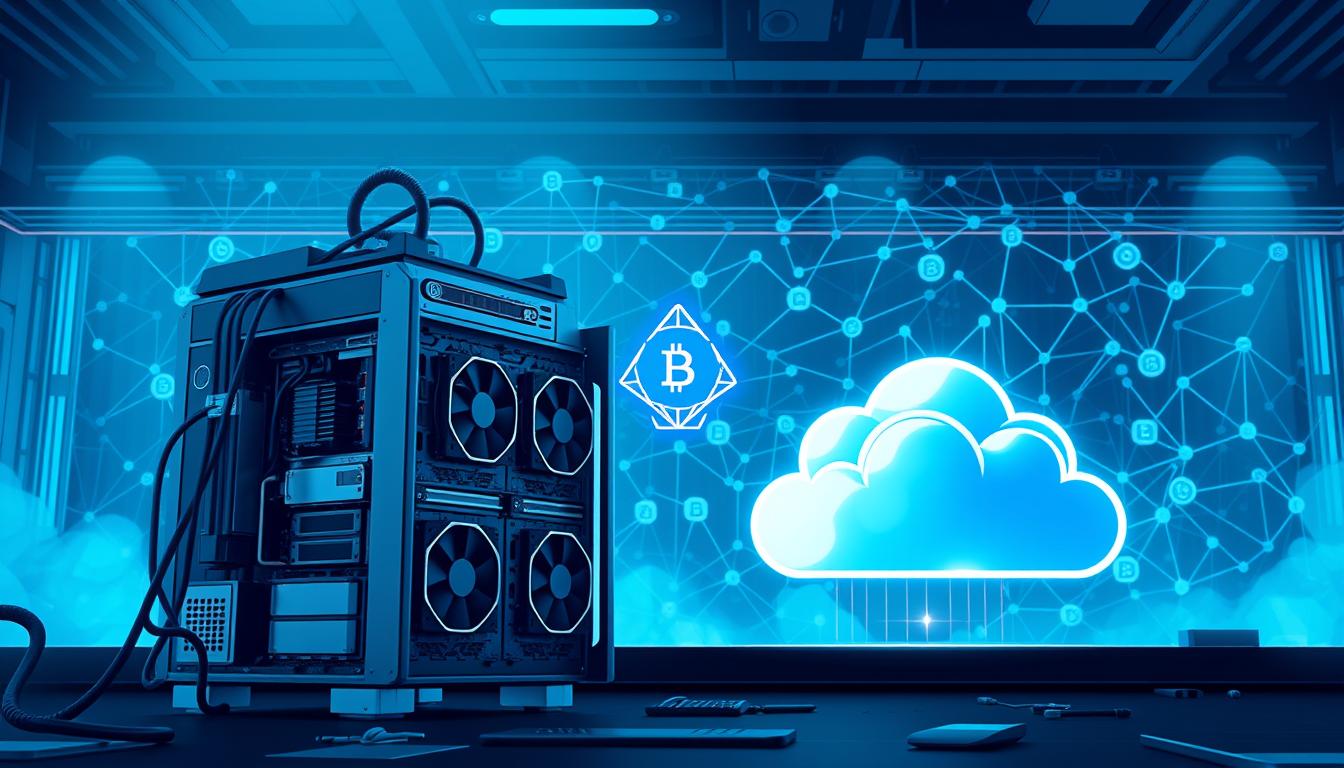
Did you know that global cryptocurrency mining consumes more electricity than some entire countries? In 2022, Bitcoin mining alone used approximately 127 terawatt-hours annually. This is more power than countries like Norway or Ukraine consume.
The world of cryptocurrency mining has dramatically transformed. Miners now face two primary strategies: cloud mining vs. hardware mining. As digital currency becomes increasingly mainstream, understanding these approaches can significantly impact your investment potential.
Your mining journey requires careful evaluation of each method’s unique advantages and challenges. Whether you’re a tech enthusiast or an investor seeking passive income, this comprehensive cryptocurrency mining comparison will guide you through essential considerations.
Key Takeaways
- Cloud mining offers lower initial investment compared to hardware mining
- Hardware mining provides greater control over mining operations
- Energy consumption varies significantly between both methods
- Initial setup costs differ dramatically between cloud and hardware mining
- Risk levels and potential returns are not uniform across mining strategies
Understanding the Basics of Cryptocurrency Mining
Cryptocurrency mining is the core of digital currency networks, turning complex computations into valuable digital assets. Your journey into this world starts with grasping how blockchain technology builds and keeps decentralized financial systems.

At its heart, cryptocurrency mining is a complex process validating transactions and securing blockchain networks. Miners employ powerful computer hardware to solve complex mathematical problems. This ensures the integrity of digital transactions.
What Cryptocurrency Mining Involves
Miners are crucial in keeping blockchain networks stable by performing two main tasks:
- Verifying cryptocurrency transactions
- Creating new digital coins through complex computational work
- Protecting the network from potential security threats
The Mining Process Explained
Bitcoin mining profitability hinges on several key factors, including hashrate comparison and operational costs. Miners compete to solve cryptographic puzzles. The first to succeed gets cryptocurrency rewards.
“Mining is not just about generating coins, but securing an entire digital financial ecosystem.”
Mining Rewards and Economic Incentives
Your bitcoin mining profitability is tied to your mining strategy. Successful miners earn block rewards and transaction fees. This makes hashrate comparison vital for potential earnings.
- Block rewards provide initial cryptocurrency compensation
- Transaction fees supplement mining income
- Efficient hardware increases potential profitability
Grasping these fundamental principles will equip you to navigate the complex world of cryptocurrency mining with confidence and strategic insight.
Cloud Mining vs. Hardware Mining: Pros and Cons

Deciding between cloud mining and hardware mining is a tough choice for cryptocurrency fans. Each option has its own set of advantages and disadvantages. These factors can greatly affect your mining journey and earnings.
To guide you, let’s examine the cryptocurrency mining comparison closely:
Cloud Mining Pros and Cons
- Pros:Low initial investment
- No equipment maintenance required
- Convenient setup
- Flexibility to switch between cryptocurrencies
- Cons:Limited control over mining operations
- Potential for scams
- Lower potential profits
- Dependence on cloud mining provider
Hardware Mining Pros and Cons
- Pros:Complete control over mining process
- Higher potential profits
- Long-term asset ownership
- Potential for reselling equipment
- Cons:High upfront equipment costs
- Complex technical setup
- Ongoing maintenance expenses
- High electricity consumption
Your decision between cloud mining and hardware mining hinges on your technical skills, budget, and investment goals. It’s crucial to weigh your resources and risk appetite before starting in cryptocurrency mining.
| Aspect | Cloud Mining | Hardware Mining |
|---|---|---|
| Initial Investment | Low | High |
| Technical Knowledge | Minimal | Advanced |
| Control Level | Limited | Full |
| Potential Profitability | Moderate | High |
Getting Started with Hardware Mining
Cryptocurrency mining demands meticulous planning and specialized gear. Success hinges on picking the right asic mining equipment and setting up an efficient mining rig. This guide will lead you through the crucial steps to build a strong mining operation.

Starting a cryptocurrency mining venture begins with choosing the right hardware. Modern miners face various options for their mining setup. Yet, making the right choice is key to profitability.
Essential Mining Equipment
Setting up your mining rig requires several critical components:
- High-performance ASIC mining equipment
- Robust graphics processing units (GPUs)
- Reliable power supply unit
- Efficient cooling system
- Stable internet connection
Mining Rig Configuration
Configuring your mining rig needs careful planning. Consider these essential factors:
- Select cryptocurrency for mining
- Research compatible hardware
- Calculate potential profitability
- Design optimal cooling strategy
Power and Cooling Considerations
Effective power management is crucial for successful mining. Your setup needs consistent electricity and temperature control to boost performance.
| Component | Power Requirements | Cooling Recommendation |
|---|---|---|
| ASIC Miner | 1500-2000W | Dedicated cooling system |
| GPU Rig | 1000-1500W | Multiple fans/liquid cooling |
Pro tip: Invest in quality cooling solutions to prevent hardware degradation and maintain optimal mining efficiency.
Exploring Cloud Mining Services

Cloud mining has transformed the cryptocurrency mining landscape, offering a straightforward route to passive income. It differs from traditional mining, where you rent mining hardware and computational power from remote data centers. This approach eliminates the need for managing complex equipment.
Exploring cloud mining investment reveals several key advantages:
- No technical expertise required
- Lower initial investment compared to hardware mining
- Reduced electricity and maintenance costs
- Instant access to mining operations
Choosing a reputable cloud mining provider is essential for success. Seek platforms with transparent pricing, proven track records, and clear contract terms. Your due diligence can protect you from potential scams and ensure a more stable passive income stream.
Popular cloud mining services offer various contract types, including:
- Hash rate contracts
- Fixed-term mining agreements
- Lifetime contracts
- Cryptocurrency-specific mining options
Before investing, carefully analyze potential returns, contract duration, and the provider’s reputation. Platforms like Genesis Mining and HashNest are known for their reliability in the cryptocurrency ecosystem.
“Cloud mining transforms cryptocurrency mining from a technical challenge into an accessible investment opportunity.”
Your cloud mining investment strategy should align with your financial goals and risk tolerance. Start small, research thoroughly, and gradually expand your passive income potential in the dynamic world of cryptocurrency mining.
Cost Analysis: Initial Investment and Operating Expenses
Entering the world of crypto mining demands a thorough financial assessment. Your mining strategy significantly influences potential earnings and long-term success. It’s essential to grasp the costs of crypto mining and energy consumption to make well-informed choices.
Crypto mining comes with significant financial commitments, regardless of the method chosen. Whether opting for hardware or cloud mining, a strategic approach is key to managing expenses efficiently.
Hardware Costs and Maintenance
Hardware mining requires a substantial initial investment:
- ASIC miners range from $2,000 to $10,000
- Cooling systems require additional $500-$1,500
- Electrical infrastructure upgrades may cost $1,000-$3,000
- Regular maintenance expenses average $200-$500 monthly
Cloud Mining Contract Pricing
Cloud mining presents alternative cost structures with various pricing models:
- Short-term contracts: More flexible, lower initial investment
- Long-term agreements: Potentially better hash rate guarantees
- Pricing typically ranges from $100 to $5,000 depending on hash power
Energy Consumption Comparison
Energy costs have a significant impact on mining profitability. Hardware mining requires a lot of electricity, with setups needing 1,000-1,500 watts all the time. Cloud mining, on the other hand, shifts these costs to service providers, potentially lowering your direct operational expenses.
Smart miners analyze both initial and ongoing expenses before committing to a mining strategy.
Profitability Factors in Both Mining Methods
Understanding the factors that influence bitcoin mining profitability is crucial. Success in cryptocurrency mining goes beyond just buying equipment or cloud mining contracts. It involves a deep dive into several key elements.
Key profitability drivers include:
- Current cryptocurrency market prices
- Network hashrate comparison
- Mining difficulty levels
- Electricity costs
- Hardware efficiency
Miners must use specialized online calculators to evaluate potential returns. These tools estimate earnings based on current network conditions and your mining setup.
| Mining Method | Profitability Factor | Impact Level |
|---|---|---|
| Hardware Mining | Electricity Costs | High |
| Cloud Mining | Contract Pricing | Critical |
| Both Methods | Hashrate Performance | Extreme |
Your mining strategy should remain adaptable. Bitcoin mining profitability can change rapidly, necessitating constant monitoring and adjustments to maintain optimal returns.
Successful miners think strategically and adapt quickly to market changes.
By grasping these profitability factors, you can make informed decisions. This maximizes your earnings while minimizing risks in cryptocurrency mining.
Most Read:- Scalping vs. Swing Trading: Which is Better for You?
Security Considerations and Risk Assessment
Protecting your crypto mining investment demands a thorough security strategy. Whether you’re into cloud mining or hardware mining, it’s vital to grasp potential risks. This knowledge is key to safeguarding your digital assets and reducing financial losses.
Hardware Security Measures
Securing your mining hardware requires several strategic steps:
- Install robust firewall protections
- Use dedicated network connections
- Implement strong password management
- Enable two-factor authentication
- Regularly update mining software
Cloud Mining Platform Reliability
When assessing cloud mining investment options, focus on these key factors:
- Check platform transparency
- Verify company registration
- Research user reviews
- Analyze historical performance
- Understand contract terms
Common Scams to Avoid
To dodge crypto mining scams and fraud, watch out for these red flags:
- Unrealistic profit promises
- Lack of verifiable mining evidence
- Pressure to invest quickly
- Undefined mining infrastructure
- Incomplete technical documentation
Remember: If an opportunity sounds too good to be true, it probably is.
Staying informed and alert is crucial in the complex world of cryptocurrency mining. It helps you avoid risks and make safer investments.
Environmental Impact and Energy Efficiency
Cryptocurrency mining has ignited heated discussions over its environmental impact. The high energy consumption in mining poses a significant challenge to the blockchain world. As digital currencies expand, it’s crucial for investors and miners to grasp the ecological consequences.
The energy needs of cryptocurrency mining differ greatly among various methods:
- Hardware mining demands a lot of electricity for its specialized gear
- Cloud mining platforms might use less energy with their centralized setup
- More mining operations are turning to renewable energy sources
“The future of sustainable cryptocurrency mining depends on innovative energy solutions and responsible practices.” – Green Tech Research
When comparing cryptocurrency mining, it’s vital to consider environmental factors. Traditional Bitcoin mining, for example, uses more electricity than some small nations. New blockchain technologies are developing more energy-efficient consensus mechanisms to tackle these issues.
| Mining Method | Average Energy Consumption | Carbon Footprint |
|---|---|---|
| Hardware Mining | High | Significant |
| Cloud Mining | Moderate | Reduced |
| Green Mining Facilities | Low | Minimal |
To lessen environmental harm, choose energy-efficient mining gear. Look into renewable energy options. Also, support blockchain networks that adopt sustainable practices.
Future Trends in Mining Technology
The cryptocurrency mining scene is rapidly evolving, offering both opportunities and challenges for miners globally. With the advancement of asic mining equipment, the industry is on the cusp of significant technological shifts. These changes could dramatically alter how we compare cryptocurrency mining.
New technologies are poised to transform the mining world, introducing unmatched efficiency and innovation. Let’s dive into the pivotal trends that will shape the future of cryptocurrency mining:
- Advanced ASIC Mining Equipment with increased computational power
- Green energy integration for sustainable mining operations
- Artificial intelligence-driven mining optimization
- Quantum computing potential in blockchain networks
Cutting-Edge Mining Innovations
Technological leaps are expanding the limits of cryptocurrency mining. Next-generation asic mining equipment is becoming more energy-efficient, compact, and powerful. This allows miners to achieve higher performance while reducing operational costs.
Regulatory Landscape Transformation
The global regulatory environments are shifting quickly, presenting both hurdles and opportunities for miners. Governments are crafting more detailed frameworks to govern cryptocurrency mining activities.
| Regulatory Aspect | Potential Impact |
|---|---|
| Energy Consumption Regulations | Stricter environmental guidelines |
| Tax Frameworks | Increased financial reporting requirements |
| Cryptocurrency Mining Licenses | More structured industry oversight |
To stay competitive in cryptocurrency mining, it’s essential to keep abreast of technological progress and regulatory shifts. This knowledge will be vital for maintaining a competitive edge in the field.
Making the Right Choice for Your Mining Journey
Deciding between cloud mining and hardware mining is akin to navigating a complex digital terrain. Your choice hinges on various personal and financial considerations. These factors will shape your strategy for earning passive income from mining.
When selecting your mining path, consider these critical aspects:
- Technical expertise required
- Initial investment capabilities
- Risk tolerance
- Long-term financial goals
Examining the pros and cons of cloud mining versus hardware mining reveals key differences. Hardware mining grants full control but requires a substantial initial investment and technical acumen. On the other hand, cloud mining is more accessible but may yield lower returns.
| Consideration | Hardware Mining | Cloud Mining |
|---|---|---|
| Initial Investment | High | Low |
| Technical Skills | Advanced | Basic |
| Control Level | Full | Limited |
Your unique circumstances will ultimately dictate the most fitting mining approach. Evaluate your resources, skills, and risk appetite carefully before committing.
“Success in cryptocurrency mining comes from informed, strategic decisions.”
There’s no one-size-fits-all solution. Your mining journey is deeply personal. The right choice must align with your financial goals and technological comfort level.
Conclusion
Choosing between cloud mining and hardware mining depends on your personal situation, technical skills, and how much you can invest. Each option has its own benefits in the world of cryptocurrency mining. Success comes from knowing the detailed advantages and disadvantages of both.
Looking at the cryptocurrency mining landscape, hardware mining gives you full control but requires a big upfront investment and technical know-how. Cloud mining, on the other hand, is more accessible with lower costs at the start. You must weigh your resources, risk tolerance, and long-term investment goals before picking a mining method.
The technology in cryptocurrency mining is always changing. Keeping up with market trends, energy efficiency breakthroughs, and regulatory shifts is key to staying competitive. Think about your local setup, electricity costs, and technical abilities when deciding.
Your mining journey is ongoing, needing constant learning and flexibility. Whether you go with cloud mining or hardware mining, be ready to change your approach as the digital currency world evolves. Stay connected with online cryptocurrency communities, follow industry leaders, and always look for new chances in this fast-paced technological field.