


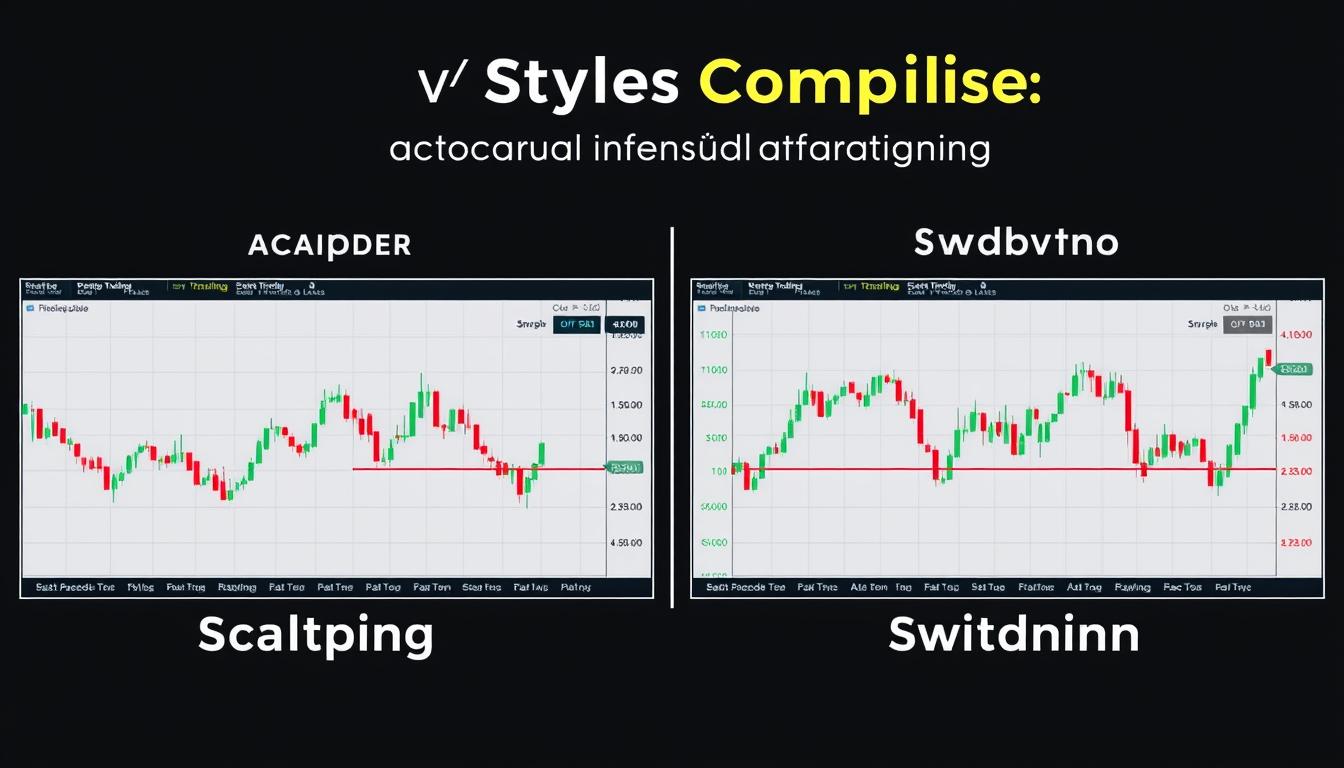
Did you know that 90% of day traders lose money in the first year? The right trading style can significantly change your financial market journey. Scalping and swing trading are two distinct methods of engaging with the market.
Choosing the right trading strategy is essential when entering the trading world. Your decision between scalping and swing trading affects your potential earnings, time commitment, and overall success. Each strategy has its own benefits, tailored to different trader personalities and financial objectives.
Comparing trading styles is more than just picking a method. It’s about understanding your risk tolerance, available time, and market knowledge. Whether you’re a busy professional or a dedicated market enthusiast, knowing which style suits you best can unlock significant investment potential.
Key Takeaways
- Trading styles directly influence investment success
- Different strategies suit different trader personalities
- Time commitment varies between scalping and swing trading
- Risk management is critical in both approaches
- Personal financial goals should guide trading style selection
Understanding the Basics of Trading Styles
Trading is a dynamic world where understanding different approaches can make or break your financial success. Day trading strategies and short-term trading techniques require deep knowledge and strategic thinking. Your journey into the trading universe begins with comprehending various trading styles that can help you navigate market complexities.

Successful traders recognize that no single approach works universally. Each trading style demands unique skills, psychological attributes, and financial commitments.
Exploring Key Trading Timeframes
Different trading timeframes offer distinct opportunities and challenges:
- Scalping: Ultra-short trades lasting minutes
- Day Trading: Positions opened and closed within one trading session
- Swing Trading: Trades held from several days to weeks
- Position Trading: Long-term investments spanning months or years
Risk Management Principles
“Protect your capital like it’s your most valuable asset – because it is.” – Professional Trader
Your risk management strategy is crucial in determining trading success. Key principles include:
- Never risk more than 1-2% of your total trading capital on a single trade
- Use stop-loss orders to limit potential losses
- Diversify your investment portfolio
- Continuously educate yourself about market trends
Capital Requirements
Different trading styles demand varying capital investments. Short-term trading techniques typically require:
- Scalping: Minimum $25,000 for day trading
- Swing Trading: Flexible capital starting from $5,000
- Consistent funding for margin requirements
Understanding these foundational aspects helps you select the best trading timeframes aligned with your financial goals and risk tolerance.
What is Scalping Trading?

Forex scalping is an active trading method that focuses on quick, short-term trades. It aims to capture small price movements in financial markets. As a scalper, you’ll make numerous trades in minutes or seconds. Your goal is to profit from high-volume trading strategies.
The essence of forex scalping lies in making fast decisions and timing the market perfectly. Professional traders use advanced technology to spot and profit from tiny price changes. They work with different currency pairs.
- Scalping requires intense concentration and lightning-fast execution
- Typical trade durations range from 30 seconds to 5 minutes
- Traders use sophisticated trading platforms with real-time data
- Minimal profit targets per trade (usually 5-10 pips)
Your success in forex scalping depends on several key factors:
| Key Success Factors | Description |
|---|---|
| Technical Analysis Skills | Advanced chart reading and pattern recognition |
| Emotional Control | Managing stress during rapid trading decisions |
| Technology Infrastructure | High-speed internet and low-latency trading platforms |
Forex scalping can be lucrative but requires skill, discipline, and ongoing market knowledge. You must develop a strong risk management strategy. Also, maintaining focus during trading sessions is crucial.
“Scalping is not for the faint-hearted—it requires precision, speed, and unwavering concentration.” – Professional Forex Trader
Understanding forex scalping can transform your trading approach. It offers unique opportunities for those ready to master its complexities.
What is Swing Trading?
Swing trading is a strategy that falls between day trading and long-term investing. It focuses on capturing larger price movements over days or weeks. This makes it appealing for those looking to make profits with less constant market monitoring.

At its core, swing trading leverages short to medium-term market momentum. Traders spot potential price swings by analyzing market trends, technical patterns, and fundamental indicators. This method offers more flexibility and lessens the stress of making quick trading decisions.
Market Analysis Techniques
Successful swing trading hinges on thorough market analysis. Traders employ various strategies to assess potential trades:
- Technical chart pattern recognition
- Trend line and support/resistance identification
- Momentum indicator evaluation
- Volume analysis
Position Sizing Strategies
Effective position sizing is vital for managing risk in swing trading. Traders adhere to several key principles:
- Risk no more than 1-2% of total account value per trade
- Calculate position size based on stop-loss levels
- Maintain portfolio diversification
Technical Indicators for Swing Traders
Swing traders use various technical indicators to guide their decisions:
| Indicator | Purpose | Typical Use |
|---|---|---|
| Moving Averages | Trend Identification | Determine market direction |
| Relative Strength Index (RSI) | Momentum Measurement | Identify overbought/oversold conditions |
| MACD | Trend Confirmation | Validate price movement signals |
“Swing trading offers a balanced approach to capturing market opportunities without the intense pressure of day trading.” – Professional Trading Analyst
Understanding these components can help you craft a solid swing trading strategy. This strategy can potentially yield consistent profits while effectively managing risk.
Most Read:-Top Emerging Blockchains to Watch in 2025
Scalping vs. Swing Trading: Which is Better for You?

Deciding between scalping and swing trading depends on your personal goals, lifestyle, and psychological makeup. Each trading style has unique characteristics that can greatly influence your investment success.
Your ideal trading approach depends on several key factors:
- Time availability
- Risk tolerance
- Emotional temperament
- Financial resources
Scalping vs. swing trading isn’t about finding a universally superior method. It’s about discovering the strategy that best fits your individual strengths and constraints.
“Success in trading comes from matching your strategy to your personality.” – Professional Trader
Traders aiming for quick, short-term gains might lean towards scalping. This method demands:
- Intense focus
- Quick decision-making
- Advanced technical analysis skills
Swing traders, on the other hand, prefer a more measured approach. They capitalize on medium-term price movements, holding positions for days or weeks. This style is ideal for those with:
- Limited daily trading time
- Lower stress tolerance
- Preference for strategic planning
Your choice between scalping and swing trading should reflect your unique trading DNA. Evaluate your skills, resources, and personal characteristics to find the most compatible approach.
Essential Tools and Platforms for Both Trading Styles
Successful trading hinges on a solid foundation of digital tools. These tools are crucial for both scalpers and swing traders. They empower your day trading strategies and market analysis methods. The right technological resources can greatly improve your trading performance and decision-making.
Choosing the right trading tools is key to a better trading experience. Modern traders need specific resources to optimize their market approach. Here are the essential tools for optimizing your trading strategy:
Top Trading Software Solutions
- MetaTrader 4/5: Industry-standard platform with advanced charting capabilities
- TradingView: Comprehensive technical analysis and social trading network
- Interactive Brokers: Professional-grade trading platform with global market access
- ThinkOrSwim by TD Ameritrade: Robust research and trading interface
Technical Analysis Toolkit
Effective market analysis relies on powerful technical analysis tools. These tools offer deep insights into market trends and potential trading opportunities:
- Candlestick pattern recognition software
- Advanced charting platforms with multiple indicator support
- Real-time market screeners
- Historical price data analysis tools
Market Research Resources
Your trading strategy benefits from comprehensive market research platforms. Here are the essential resources:
- Bloomberg Terminal: Professional financial data and analytics
- Finviz: Stock screening and market visualization tool
- Yahoo Finance: Free comprehensive financial information
- TradingEconomics: Global economic calendar and market insights
Investing in quality tools is an investment in your trading success. Choose platforms that match your trading style. They should provide the analytical depth needed for informed decisions.
Psychological Aspects of Trading Styles
Trading is deeply rooted in mental strategy, not just financial planning. Your psychological mindset can either elevate or hinder your trading success. Each trading style necessitates specific mental abilities, testing your emotional fortitude.
Scalping and swing trading pose unique psychological hurdles. Scalpers need to cultivate nerves of steel, enabling them to make swift decisions amidst high-pressure situations. Their approach highlights the importance of:
- Exceptional emotional control
- Quick decision-making abilities
- Low stress tolerance
- Ability to manage micro-level market fluctuations
Swing traders, on the other hand, require patience. They navigate markets with calculated precision, recognizing that strategic patience often leads to better outcomes than constant action.
| Trading Style | Psychological Trait | Key Mental Skill |
|---|---|---|
| Scalping | High-Stress Tolerance | Rapid Decision Making |
| Swing Trading | Patience | Strategic Thinking |
Building mental resilience is paramount. Elite traders dedicate considerable time to psychological development, recognizing that emotional intelligence surpasses technical prowess. Your capacity to manage fear, greed, and impulsivity is pivotal to your trading success.
“Trading is 10% strategy, 90% psychology” – Professional Trader
Ultimately, select a trading method that resonates with your innate temperament. Your psychological comfort will profoundly influence your performance in the ever-changing financial markets.
Time Commitment and Lifestyle Considerations
Trading is more than just strategies and market analysis. It’s about crafting a lifestyle that aligns with your financial aspirations. Your decision between short-term trading and various timeframes will deeply affect your daily life and personal commitments.
Each trading style necessitates a specific time investment. Short-term trading techniques require a significant daily commitment. On the other hand, swing trading offers more flexibility in your schedule.
Daily Trading Routines
Your trading routine is shaped by your chosen strategy and preferred timeframes. Here’s a comparative overview:
- Scalping demands constant market monitoring
- Swing trading allows for a more relaxed schedule
- Intraday trading necessitates focused 2-4 hour windows
| Trading Style | Daily Time Commitment | Screen Time |
|---|---|---|
| Scalping | 4-6 hours | High intensity |
| Swing Trading | 1-2 hours | Moderate |
Work-Life Balance Strategies
Successful traders recognize the importance of mental health and personal time. Establishing structured routines and setting clear boundaries is key to achieving balance.
“Trading is a marathon, not a sprint. Protect your energy and maintain perspective.” – Professional Trader
Your ideal trading approach should enhance your lifestyle, not overwhelm it. By thoughtfully choosing your trading style and managing time wisely, you can forge a sustainable path to financial success.
Profit Potential and Risk Assessment
Understanding the profit potential and risk assessment in forex scalping and swing trading is crucial for your financial success. Each trading strategy offers unique opportunities and challenges that can significantly impact your investment returns.
Swing trading profits are typically more substantial, occurring over longer time periods. Swing traders capitalize on price movements that occur over days or weeks. This allows for more strategic decision-making and reduced transaction costs.
- Swing trading allows for deeper market analysis
- Lower trading frequency means reduced commission expenses
- Potential for higher percentage returns per trade
Forex scalping, on the other hand, focuses on capturing small price fluctuations within short timeframes. This strategy demands quick reflexes and precise market timing. While scalping can generate multiple small profits, it also carries higher transaction costs and increased psychological pressure.
Risk management is the cornerstone of successful trading, regardless of your chosen strategy.
Your risk assessment should consider several critical factors:
- Capital allocation
- Personal risk tolerance
- Market volatility
- Trading psychology
Professional traders recommend starting with a conservative approach. Gradually increase your exposure as you build confidence and develop robust trading skills.
Conclusion
Exploring the differences between scalping and swing trading demands a deep look into your own financial goals and risk tolerance. Your choice between these trading styles should reflect your personal financial aspirations, available time, and comfort with risk. It’s crucial to recognize your strengths and weaknesses in trading.
Scalping and swing trading each have their own benefits. Scalping requires quick thinking and intense focus, whereas swing trading offers a more relaxed pace for analysis. Success in trading depends on aligning your style with your personality, investment capacity, and lifestyle. Experts suggest starting with a style that fits your natural inclinations and schedule.
Technology and ongoing learning are essential for your trading success. Modern platforms offer advanced tools for both scalping and swing trading. Spend time learning about market trends, practicing with demo accounts, and mastering risk management. Remember, no single trading style ensures success. Adaptability and continuous learning are your most valuable tools.
Your trading journey is a continuous learning process. Begin with small steps, monitor your progress closely, and be ready to adjust your strategy. The most successful traders are flexible, refining their methods based on market changes and personal growth. Whether you opt for scalping or swing trading, a commitment to learning and self-improvement will be your greatest asset.